
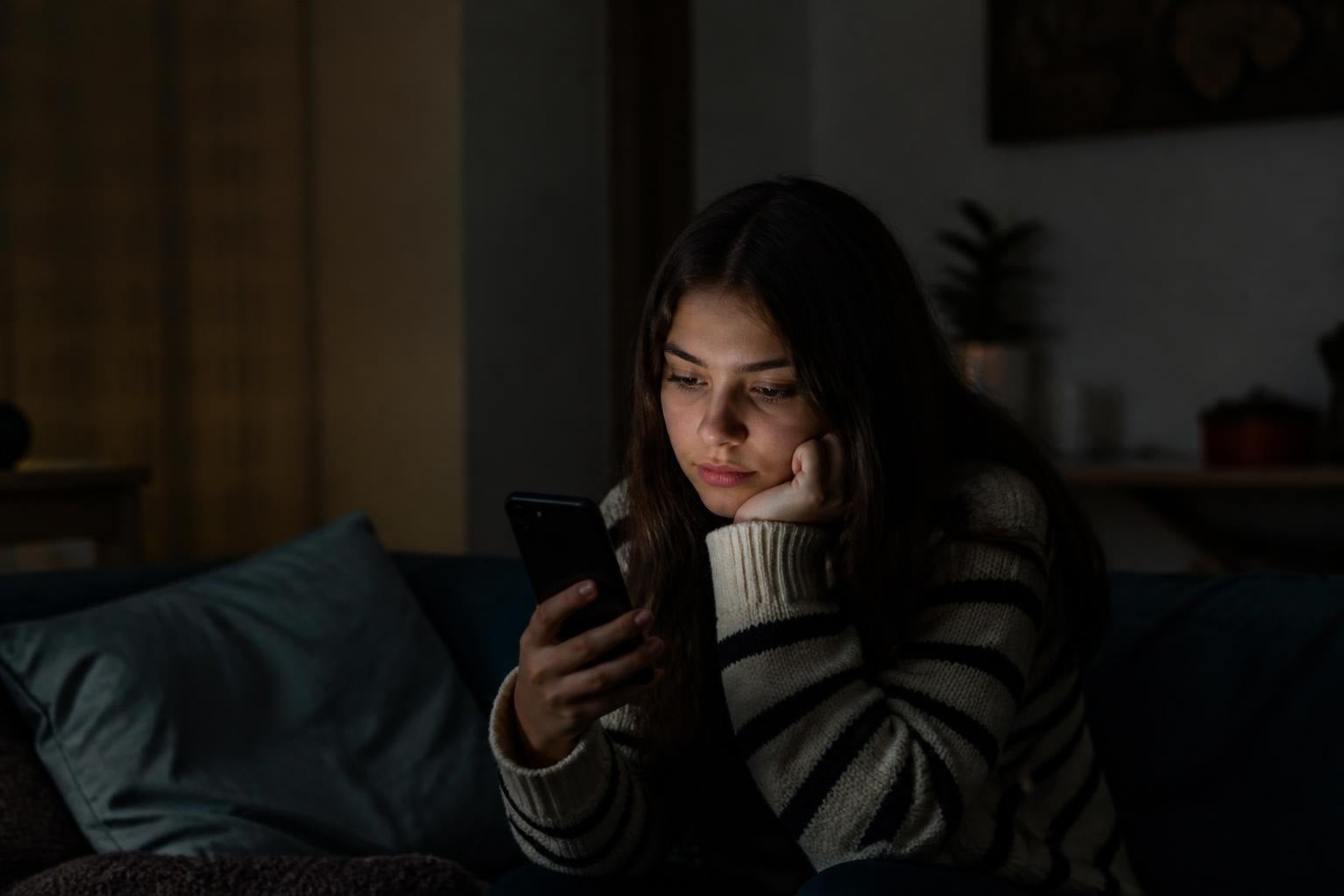
Social media mental health concerns are everywhere, yet the relationship between scrolling and anxiety isn’t as simple as you might think. You’ve probably noticed feeling worse after spending time on Instagram or TikTok, but the real culprits behind your unease might surprise you.
The connection between platforms and your mental state depends on how you use them, who you are, and what you’re looking for. Indeed, some people find genuine connection online while others spiral into comparison and isolation.
This article explores why social media feels addictive, what actually triggers anxiety, and how you can protect your mental health without quitting entirely.
Feeling anxious more than you’d like? Book a free 15-minute consultation →
Why Social Media Feels Addictive
The dopamine effect explained
Your brain releases dopamine not when you experience pleasure, but in anticipation of it. This distinction explains why social media hooks you so effectively. Dopamine surges through your mesolimbic system—connecting the ventral tegmental area in your brainstem to the nucleus accumbens—creating a sensation of wanting, not liking.
When you reach for your phone, your brain floods with dopamine before you even see what’s on your screen. This anticipatory response drives the behavior, not the actual content you find. The mechanism mirrors drug addiction pathways. Self-disclosure on social networks activates the same brain regions that light up when someone uses an addictive substance.
Social media platforms exploit this system by triggering small dopamine releases with each scroll, like, or comment. Over a billion people spent an average of 3 hours scrolling through social media in 2020, with some countries reporting daily averages exceeding 4 hours [1]. After you sign off, your brain drops into a dopamine-deficit state as it adapts to the unnaturally high levels just experienced. This explains why scrolling feels satisfying in the moment but leaves you drained afterward.
Unpredictable rewards keep you scrolling
The unpredictability of your feed operates exactly like a slot machine. Sometimes you open Instagram and find 30 likes. Sometimes you find 3. This uncertainty creates what behavioral psychologists call variable reward schedules—the most powerful method for reinforcing behavior.
Your dopamine neurons respond to reward prediction error, meaning they react to the difference between what you expected and what you got. When a notification delivers something unexpectedly good, the dopamine surge is massive. When it delivers nothing, the drop creates discomfort that motivates you to try again. Both outcomes drive more checking.
Platforms employ sophisticated algorithms with features like infinite scrolling, pull-to-refresh, and auto-play to maintain this cycle. The integration of short-form video content has proven particularly effective at triggering patterns that lock users in continuous scrolling loops [1]. Every pull-to-refresh acts as a tiny gamble. You check newsfeeds hoping to encounter novel information—a friend’s wedding announcement or interesting news—but precisely when these rewards appear remains unpredictable.
How early exposure shapes your brain
Adolescent brains show stronger activation in reward centers when receiving social validation compared to adult brains. Starting around age 10, children’s brains undergo a fundamental shift that drives them to seek social rewards, including peer attention and approval [2]. The prefrontal cortex responsible for impulse control doesn’t fully develop until roughly age 25, yet the reward circuitry runs at maximum capacity during puberty.
Early exposure creates lasting impacts. More than 50 percent of kids 4 years and younger engage with smartphones or tablets regularly, while the 8-to-12 age group spends four to six hours on screens [3]. Increased screen time can reduce the integrity of brain structures supporting early literacy in pre-kindergarten students, causing delays in language acquisition and problems with sustained attention.
A study tracking more than 7,000 participants aged 9-11 found that children who began using social media at younger ages and whose usage increased rapidly during adolescence were significantly more likely to experiment with alcohol, cannabis, and nicotine later on [4]. Adolescents become victims of an unrelenting dopamine cycle—desire induced by endless feeds, seeking rewards through likes and comments, which then reinstates the desire behavior [5].
The Real Connection Between Social Media and Anxiety
Almost 25% of adolescents believe social media has a mostly negative effect, yet the relationship between platforms and anxiety remains more nuanced than headlines suggest [6]. Understanding how you use these tools matters more than how much time you spend on them.
Active use vs passive scrolling
Active engagement produces different outcomes than passive consumption. People who use social media more actively report greater wellbeing and more positive emotions, but also greater symptoms of anxiety [7]. Active use involves interacting with other users through broadcasting status updates, sending private messages, and responding to posts.
In contrast, passive use refers to consuming content without interaction. Scrolling through newsfeeds without commenting or engaging correlates with upward social comparison, where you feel others are better than you [7]. Approximately 34.5% of respondents aged 16-30 use social networking sites for more than two hours daily, and intensive passive use correlates with greater loneliness [8]. Spending more than two hours daily on social networking sites is associated with a substantial increase in loneliness prevalence [8].
Active users perceive higher levels of online support, with 97% of studies showing beneficial associations [7]. Identically, socially anxious individuals benefit more from online interaction than face-to-face encounters, feeling less anxious and more satisfied when socializing through screens [9].
Social comparison and upward comparison traps
Comparisons with others perceived as better off produce more marked negative impacts on wellbeing than lateral or downward comparisons [3]. A meta-analysis of 70 studies showed that social comparison on social media is positively related to higher levels of depression and anxiety [3].
The visual nature of platforms creates a rich environment for upward comparisons regarding performance and physical appearance. Adolescents portray ideal versions of themselves using advanced filters and photo editing, causing viewers to perceive others as having better lives [3]. A meta-analysis of 156 studies found that social comparison is positively associated with body dissatisfaction, especially among women and younger people [3].
Leaked documents revealed that Instagram researchers found the app harmful to teen body image, with about 1 out of 3 teen girls feeling worse about their bodies due to using the app, and 14% of boys experiencing similar effects [6].
Fear of missing out (FOMO) and exclusion
FOMO refers to the apprehension that others may be having more positive experiences than you [3]. As many as 69% of Americans have experienced this fear at some point [2]. Browsing social media can lead to FOMO when you see posts about parties you weren’t invited to [6].
Research involving more than 5,000 people found that FOMO stems from missing opportunities to bond with valued social groups [2]. Witnessing friends connecting or making memories on social media plants seeds of worry about being excluded from the group altogether [2]. People with higher levels of social anxiety or greater need for social connection are more prone to experiencing FOMO [2].
When correlation doesn’t mean causation
Most studies indicate that time spent on social media is correlated with depression and anxiety, but correlation doesn’t necessarily mean causation [6]. In light of this uncertainty, researchers have conducted random assignment experiments. When experiments lasting two weeks or more ask people to cut back or eliminate social media use, they nearly always find participants are happier and less depressed [10].
In one study from 2020, people who deactivated their Facebook account for a month reported lower depression and anxiety, as well as increases in happiness and life satisfaction [6]. A natural experiment tracking Facebook’s rollout across college campuses found mental health issues rose among students when their campuses adopted the platform [10].
Different Types of Users Experience Different Effects
Your psychological makeup determines whether social media mental health effects help or harm you. Anxiety symptoms including generalized anxiety, social anxiety, attachment anxiety, and FOMO are closely related to problematic social network use, with correlations ranging from 0.33 to 0.38 [11].
How socially anxious people use social media
People with high social anxiety prefer computer-mediated communication due to perceived control and social liberation [11]. They report greater comfort and self-disclosure online compared to face-to-face interactions, believing digital platforms offer reduced risk of negative evaluation [12].
However, this preference doesn’t eliminate their struggles. Socially anxious individuals experience anxiety, negative thoughts, and safety behaviors on platforms just as they do offline [13]. They feel more anxious when interacting socially on Facebook rather than passively using the site [13]. Those with higher social anxiety interpret ambiguous Facebook scenarios more negatively and use more safety behaviors while engaging online [13].
Research shows that socially anxious individuals report using social media to compensate for social deficits but don’t ultimately accumulate online social resources [14]. Using social media as an alternative to face-to-face communication results in poorer wellbeing and lower self-confidence if not coupled with real-time interaction [15].
Loneliness and the search for connection online
Lonely individuals turn to platforms seeking connection, but higher social media use correlates with increased loneliness [16]. A nine-year study tracking nearly 7,000 adults found both passive and active use were associated with increased loneliness over time [17]. Active users who engaged more frequently reported heightened loneliness compared to passive users [18].
Your motives shape outcomes. Using social media predominantly to escape burdensome feelings like loneliness shows no correlation between time spent and perceived loneliness [16]. Conversely, those using platforms for relationship maintenance experience higher loneliness with more frequent use, possibly disappointed by lack of reciprocity or finding virtual contact an unsatisfying substitute [16].
Why some people benefit while others suffer
Benefits and harms vary across demographic groups. Benefits associate with younger age, better education, and being white, while harms associate with older age, less education, and being a racial minority [1]. Routine social media use as part of everyday life positively associates with social wellbeing and positive mental health, while emotional connection like checking apps excessively negatively associates with all health outcomes [1].
What Actually Triggers Anxiety on Social Media
Specific situations trigger social media mental health anxiety more than general scrolling habits. Understanding these precise moments helps you recognize when platforms shift from connection tools to sources of distress.
Seeing events you weren’t invited to
Watching posts about gatherings you weren’t invited to ranks among the top social media-induced stressors. A 2015 Pew study revealed this exclusion triggers immediate anxiety as you witness friends bonding without you [19]. The visibility of social restructuring plays out publicly through photos showing shared gatherings where you’re absent [20].
Seeing others engaging in activities or relationships you wish you had fuels restlessness and dissatisfaction [21]. In reality, platforms designed to increase connection paradoxically make you feel like everyone is having a party that you didn’t get invited to [7].
Pressure to post perfect content
You face constant pressure to post positive and attractive content about yourself [19]. Approximately 45% of Gen Z report feeling tired of picture-perfect posts, believing there’s too much pressure to be perfect [8].
Curated highlight reels distort reality and create unrealistic expectations about how life should look [22]. Engagement metrics like likes, views, and comments feel personal even though algorithms drive them rather than actual value or merit [22]. When content doesn’t perform as hoped, it sparks self-doubt and impacts confidence [22].
Waiting for likes and comments
Getting comments and likes creates measurable anxiety [19]. A national survey found 56% of youth said it was a negative experience to post content and not receive enough likes [23]. Receiving fewer likes causes adolescents to feel more strongly rejected and report more negative thoughts about themselves [24].
Not getting enough validation increases depression and anxiety, particularly in vulnerable populations for whom platforms contribute to a cycle of rejection [24]. Correspondingly, insufficient validation triggers negative affect including feeling stressed, sad, and anxious [23].
Loss of control over what others post about you
Having someone post things about you that you cannot change or control creates significant anxiety [19]. Not being tagged in social media posts represents a form of ostracism that threatens fundamental needs including belonging, self-esteem, and meaningful existence [3]. This absence of expected social feedback impinges upon acknowledged social status and acceptance [3].
Feeling replaceable in friendships
Anxiety emerges from wondering if you’ll be replaced in friendships. If you don’t respond to a best friend’s picture quickly or effusively enough, will she find a better friend [19]? The unfollowing decision becomes loaded with meaning as every option feels simultaneously too much and not enough [20]. Watching their life continue without you through their posts becomes its own form of psychological difficulty [20].
What You Can Do to Protect Your Mental Health
Protecting your social media mental health doesn’t require deleting every app. Small adjustments create meaningful change when applied consistently.
Monitor your emotions before and after use
Start by tracking how you feel immediately before picking up your phone and after putting it down [25]. Notice physical changes during use. Does your heart rate increase? Are you holding your breath? Do you become tense [26]? Recording feelings, thoughts, and physical sensations during anxious episodes helps identify consistent patterns [27]. This self-observation builds control over your response [25].
Set time limits that actually work
A University of Pennsylvania study found that reducing social media use to 30 minutes daily resulted in significant reductions in anxiety, depression, loneliness, and sleep problems [28]. Set strict boundaries rather than loose guidelines. Half an hour per app daily proves more effective than two-hour limits [29]. Avoid switching from TikTok to YouTube as replacement behavior [29]. Use built-in screen time settings to enforce these limits.
Choose active engagement over passive scrolling
Active participation offers more engagement than mindless consumption [28]. Comment on posts, send messages, and share content instead of scrolling silently. Active users report greater wellbeing, while passive use correlates with social comparison and inadequacy feelings [30].
Take screen-free breaks without quitting completely
Charge your phone outside your bedroom [29]. Establish device-free zones during mealtimes and gatherings [31]. Avoid screens at least one hour before bedtime to protect sleep quality [31].
Recognize your personal triggers
Track usage patterns and emotions right before checking social media [32]. Are you bored, stressed, or avoiding difficult tasks? Identifying situational triggers helps you prepare alternatives instead of defaulting to scrolling [26].
Conclusion
Social media mental health isn’t a simple good-versus-bad debate. The platforms themselves don’t cause your anxiety; rather, how you use them shapes your experience. Passive scrolling, upward comparison, and FOMO create distress, while active engagement and meaningful connection offer genuine benefits. Your psychological makeup matters too, as shown above through the varying experiences of socially anxious and lonely individuals.
You don’t need to quit entirely to protect your wellbeing. Start by recognizing your personal triggers and monitoring your emotional state before and after use. Set realistic time limits, choose active participation over mindless consumption, and take regular screen-free breaks. These small adjustments create meaningful change without sacrificing the genuine connections platforms can provide.
References
[1] – https://hsph.harvard.edu/news/social-media-positive-mental-health/
[2] – https://news.cornell.edu/stories/2024/10/what-fuels-our-fear-missing-out
[3] – https://www.sciencedirect.com/science/article/pii/S074756322100385X
[4] – https://www.addictioncenter.com/behavioral-addictions/social-media-addiction/
[5] – https://pmc.ncbi.nlm.nih.gov/articles/PMC11804976/
[6] – https://www.center4research.org/social-media-affects-mental-health/
[7] – https://www.millennialtherapy.com/anxiety-therapy-blog/social-media-pressure-to-be-perfect
[8] – https://medium.com/the-shortform/there-is-too-much-pressure-to-be-perfect-on-social-media-73e298027f28
[9] – https://www.sciencedirect.com/science/article/abs/pii/S0747563217303655
[10] – https://www.jeantwenge.com/faq-items/correlation-vs-causation-know-social-media-actually-causes-unhappiness-depression/
[11] – https://link.springer.com/article/10.1186/s40359-024-01705-w
[12] – https://pmc.ncbi.nlm.nih.gov/articles/PMC7484355/
[13] – https://pmc.ncbi.nlm.nih.gov/articles/PMC7086304/
[14] – https://www.sciencedirect.com/science/article/pii/S245195882100018X
[15] – https://nationalsocialanxietycenter.com/2016/12/20/the-impact-of-social-media-on-social-anxiety/
[16] – https://pmc.ncbi.nlm.nih.gov/articles/PMC9817115/
[17] – https://news.web.baylor.edu/news/story/2025/social-medias-double-edged-sword-study-links-both-active-and-passive-use-rising
[18] – https://publichealthpost.org/mental-behavioral-health/the-social-media-paradox-more-friends-less-connection/
[19] – https://www.gse.harvard.edu/ideas/usable-knowledge/17/12/social-media-and-teen-anxiety
[20] – https://convenientcounselingservices.com/navigating-friendship-breakups-in-the-age-of-social-media-silence/
[21] – https://www.emberpsychotherapycollective.com/blog/how-social-media-affects-your-anxiety-amp-what-to-do-about-it
[22] – https://www.menningerclinic.org/blog/mental-health-and-the-pressures-of-social-media
[23] – https://pmc.ncbi.nlm.nih.gov/articles/PMC7722198/
[24] – https://www.rochester.edu/newscenter/getting-fewer-likes-on-social-media-can-make-teens-anxious-and-depressed-453482/
[25] – https://evolvepsychiatry.com/blog/social-media-effects-on-mental-health-emotional-cognitive-behavioral-and-social-impact-explained
[26] – https://aepsychotherapy.com/tips-for-managing-social-media-anxiety/
[27] – https://www.grandrisingbehavioralhealth.com/blog/how-to-identify-and-manage-triggers-for-anxiety
[28] – https://www.truity.com/blog/social-media-ruining-your-emotional-intelligence
[29] – https://www.georgetown.edu/news/digital-detox-reduce-screen-time-benefits/
[30] – https://academic.oup.com/jcmc/article/29/1/zmad055/7595758
[31] – https://www.hhs.gov/sites/default/files/sg-youth-mental-health-social-media-advisory.pdf
[32] – https://www.thecounselingcenter.org/post/social-media-triggers-digital-temptations
Is anxiety taking up more space than you’d like?
Anxiety counseling can help you understand what’s driving it and build practical tools to feel calmer day to day — online across Texas and Florida, or in person in Flower Mound.
Book a Free 15-Minute Consultation Learn about anxiety counseling →