
Your heart pounds in your chest, the room spins, and a wave of terror washes over you. In that moment, it feels like you’re losing all control, and the fear of it happening again can feel just as overwhelming. If this experience sounds familiar, please know you are not alone, and there is a path back to calm. Understanding and practicing gentle panic attack coping skills is the first, most powerful step you can take to reclaim your sense of safety and peace when anxiety feels overwhelming.
This guide was created with deep compassion to meet you exactly where you are. We will walk alongside you, offering a clear, step-by-step plan to gently guide yourself through the storm of a panic attack. Here, you will find practical tools to soothe your body and mind, helping you feel in control again. Our hope is that you not only learn how to navigate these difficult moments but also begin to build a foundation of lasting resilience, reducing the fear and finding your way back to a life of calm.
Understanding a Panic Attack: What’s Happening in Your Body and Mind
If you have ever experienced a panic attack, you know how overwhelming and frightening it can be. It often feels like a sudden, terrifying wave of fear that comes out of nowhere, leaving you feeling powerless. Please know, you are not alone in this experience. The first step toward finding calm is gently understanding what a panic attack is and recognizing that while it is intensely uncomfortable, it is temporary and not life-threatening. This understanding is the foundation for building effective panic attack coping skills.
During a panic attack, your mind and body can feel completely out of control. The experience is different for everyone, but common symptoms often include:
- A racing or pounding heart
- Feeling dizzy, lightheaded, or faint
- Shortness of breath or a feeling of being smothered
- Trembling, shaking, or sweating
- An intense feeling of dread or a fear of losing control
- A sense of detachment from yourself or your surroundings
It’s important to validate these feelings. What you are experiencing is real and incredibly difficult, but it is a process that your body is capable of moving through.
Your Body’s Natural Alarm System
Think of a panic attack as your body’s internal alarm system—the “fight, flight, or freeze” response—being triggered by a false alarm. Your brain perceives a threat, and your body floods with adrenaline to prepare you for danger. This rush of hormones is what causes the racing heart and rapid breathing. Your body isn’t malfunctioning; it’s trying to protect you. These physical sensations are harmless, even though they feel terrifying in the moment.
The Difference Between Panic and an Anxiety Attack
While often used interchangeably, it can be helpful to know the difference. Panic attacks are typically sudden and intense, peaking within minutes, and can occur without any obvious trigger. Anxiety, on the other hand, often builds more gradually in response to a specific worry or stressor. Both experiences are challenging and deserve compassion and gentle care. Learning to navigate these moments is a key part of your healing journey and developing your personal panic attack coping skills.
In-the-Moment Skills to Gently Ground Yourself During an Attack
When a wave of panic hits, your first instinct might be to fight it. But one of the kindest things you can do for yourself is to gently anchor your mind in the present moment. These in-the-moment panic attack coping skills are not about eliminating fear, but about finding solid ground until the storm passes. By focusing on your senses, you can guide your mind back to the safety of the here and now.
Breathing to Signal Safety to Your Body
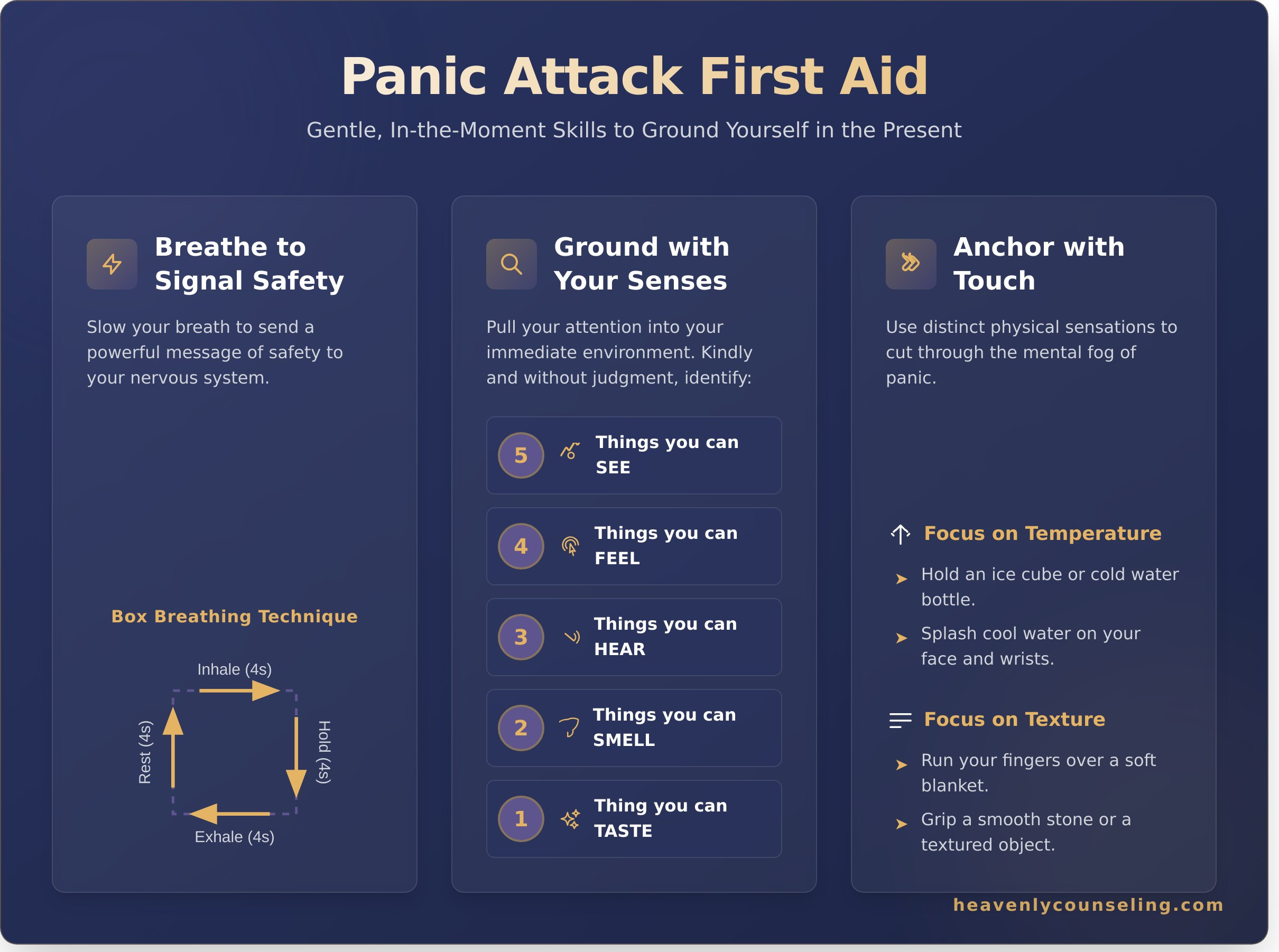
During a panic attack, your breathing often becomes rapid and shallow, signaling danger to your nervous system. By intentionally slowing your breath, you send a powerful message of safety back to your body. Avoid deep gasps; instead, focus on a slow, controlled exhale. You can try ‘Box Breathing’:
- Gently breathe in through your nose for a count of 4.
- Kindly hold your breath for a count of 4.
- Slowly exhale through your mouth for a count of 4.
- Rest for a count of 4 before repeating.
Try placing a hand on your stomach to feel it rise and fall. This physical feedback can help you stay focused on the gentle rhythm.
The 5-4-3-2-1 Grounding Technique
This simple yet powerful technique pulls your attention out of the storm of anxious thoughts and into your immediate environment. It’s one of the most effective in-the-moment coping techniques recommended by experts because it engages multiple senses. Kindly and without judgment, work through the following steps:
- 5: Name five things you can see around you. (A lamp, a crack in the wall, the color of your socks.)
- 4: Acknowledge four things you can feel. (The texture of your jeans, the cool surface of a table, your feet on the floor.)
- 3: Listen for three things you can hear. (A ticking clock, distant traffic, your own breathing.)
- 2: Notice two things you can smell. (The scent of soap, coffee, or even just the air in the room.)
- 1: Name one thing you can taste. (The lingering taste of toothpaste, or take a sip of water.)
Engaging Your Sense of Touch
The sensation of touch can be a powerful anchor. Sharp, distinct feelings, especially temperature, can cut through the mental fog of panic and demand your attention. This redirection is a core part of many effective panic attack coping skills. Try holding an ice cube in your hand, gripping a cold water bottle, or splashing cool water on your face and wrists. You can also focus on a comforting texture, like running your fingers over a soft blanket or a smooth stone. The goal is to give your brain a new, tangible sensation to focus on instead of the fear.
Cognitive Skills: Reclaiming Your Thoughts from Fear
A panic attack isn’t just a physical experience; it’s a storm of terrifying thoughts. Your mind might race with catastrophic “what ifs,” making you feel as though you’re losing control or in grave danger. The beautiful truth is that you can learn to gently guide your thoughts back to a place of safety. These thoughts are powerful, but they are not always true. Learning to observe them without getting swept away is a foundational part of your healing journey.
Riding the Wave: Accepting the Sensation
It may sound counterintuitive, but one of the most powerful things you can do is to stop fighting the panic. Imagine the feeling is a large wave in the ocean. If you stand rigid against it, it will crash over you with force. But if you learn to float with it, you’ll be carried over its peak until it gently recedes. Resisting the sensations often adds more fear to the fire. Instead, try to remind yourself: “This feeling is uncomfortable, but it is not dangerous. I can allow it to pass through me.”
Fact-Checking Your Fearful Thoughts
During a panic attack, your mind is trying to protect you, but its alarm system has become overly sensitive. You can become a gentle detective for your own thoughts. When a fearful thought arises, ask it a soft question: “What is the evidence that this is actually happening right now?” Remind yourself of all the times you have felt this way before and have come through safely. Many effective panic attack coping skills focus on this gentle shift from catastrophic “what ifs” to the reality of “what is.” Focus on your present moment with the phrase: “I am safe right now, even if I feel scared.”
Creating Calming Mantras or Prayers
In a moment of intense fear, your mind needs a safe place to land. A simple, repeatable phrase can act as a powerful anchor, giving you something to hold onto while the storm passes. This isn’t about ignoring the feeling, but about giving your focus a new, calming direction.
- “This feeling will pass.”
- “I am breathing in peace and breathing out fear.”
- “I can handle this sensation.”
For those who find comfort in faith, a short, familiar prayer or a meaningful verse can provide profound reassurance. The repetition itself is a soothing rhythm for a worried mind, offering a steady hand to hold.
Proactive Skills: Building a Foundation of Calm in Your Daily Life
While in-the-moment strategies are essential, the journey toward lasting peace involves more than just surviving an attack. It’s about gently and intentionally creating a life that feels safer and more resilient. Think of this not as a chore, but as a profound act of compassionate self-care. The small, consistent choices you make each day build a strong foundation, making your nervous system less vulnerable to panic.
These proactive habits are just as vital as any of the other panic attack coping skills. They empower you to move from a reactive state to a place of quiet strength and preparedness.
Identifying Your Personal Triggers
Knowledge is a gentle form of power. By understanding what makes you more susceptible to panic, you can make small, informed choices. Try keeping a simple journal for a week or two. Note when you feel anxious and what was happening—did you have too much caffeine, miss a meal, or get poor sleep? This isn’t about avoiding life, but about noticing patterns with kindness. Awareness allows you to support yourself better, perhaps by choosing herbal tea in the afternoon or protecting your bedtime.
Sometimes, these stressors are external, like navigating the complexities of running a business or facing a legal challenge, which can feel incredibly overwhelming. Getting professional guidance to manage these external pressures is a key part of reducing your overall anxiety load; for those in South Florida dealing with such issues, you can discover Matthew Fornaro, P.A. for support.
Triggers can also be tied to deeper, ongoing stressors related to your health and well-being. For many women, the anxiety that comes with hair thinning or scalp problems can be a significant factor. Addressing the root cause of such worries is a powerful form of self-care, and if this is a concern for you, you can explore Hair Loss Consultations to find expert guidance.
Mindfulness and Relaxation Practices
Consistently practicing relaxation teaches your body how to access a state of calm. You are creating a “muscle memory” for peace that you can draw upon when you feel overwhelmed. This doesn’t need to be complicated. You can start with:
- A 5-Minute Mindful Pause: Once a day, simply sit and focus on the physical sensation of your breath moving in and out. When your mind wanders, gently guide it back.
- Progressive Muscle Relaxation: Before sleep, try tensing and then releasing each muscle group from your toes to your head. This releases physical tension you may not have noticed.
- Gentle Movement: A slow walk, gentle stretching, or restorative yoga can help release stored-up anxious energy and reconnect you with your body.
Creating Your Mental Health First-Aid Kit
Having a physical collection of comforting items can be incredibly grounding. It’s a tangible toolkit you can turn to when you feel distress building. Gather a few things that bring you a sense of safety and place them in a small bag or box. Your kit might include:
- A comforting scent, like a small bottle of lavender essential oil.
- A cherished photo of a loved one, a pet, or a peaceful place.
- A small, smooth stone or a piece of soft fabric to touch.
- An index card with your most effective coping skills written down.
- The phone number of a trusted friend, family member, or your therapist.
After the Storm: How to Care for Yourself Post-Attack
The intense wave of panic has passed, but the emotional and physical tide it leaves behind can be just as challenging. It’s completely normal to feel exhausted, shaky, and deeply vulnerable in the hours following a panic attack. Your body and mind have just been through an incredibly taxing experience. This aftermath is not a sign of weakness; it is a natural response to a physiological alarm. The most important thing you can do now is offer yourself gentle, compassionate care.
Remember, recovery is a quiet process. There is no pressure to “bounce back.” The focus now is on creating a space of safety and calm to help your nervous system settle. These gentle recovery steps are a vital part of your overall panic attack coping skills.
Practice Gentle Self-Talk
After a panic attack, it can be easy for self-criticism to creep in. Instead of frustration, meet yourself with the same kindness you would offer a dear friend. Acknowledge the immense strength it took to endure the storm. Counteract any feelings of shame with gentle, reassuring truths.
- “That was incredibly hard, and I made it through.”
- “My body was trying to protect me, and now I can rest.”
- “It’s okay to feel drained. I will give myself the time I need.”
- “I am safe now.”
Rest and Rehydrate
A panic attack floods your body with adrenaline, and the subsequent crash is physically draining. Your muscles may feel tense, and you might have a headache or feel foggy. Honoring your body’s need for rest is a powerful act of self-care. Don’t push yourself to be productive.
Find a comfortable, quiet place to sit or lie down. Sip on cool water or a warm, caffeine-free herbal tea like chamomile to rehydrate and soothe your system. Allow yourself to engage in a low-stimulation, comforting activity, such as listening to calm music, wrapping yourself in a soft blanket, or watching a favorite, lighthearted show. Give yourself permission to simply be until you feel more grounded.
Learning how to care for yourself in the aftermath is one of the most compassionate panic attack coping skills you can cultivate. It teaches your mind and body that safety and peace always follow the fear. If you feel you need gentle guidance on your healing journey, know that professional support is available to help you find your calm.
When to Seek Professional Support for Panic Attacks
Learning to navigate a panic attack is a courageous step on your healing journey. The self-soothing techniques and grounding exercises in this guide are powerful tools for managing moments of intense fear. But sometimes, even with the best tools, the weight of anxiety can feel too heavy to carry alone. Please know that reaching out for professional support is not a sign of weakness—it is an act of profound strength and self-care.
A therapist provides a safe, confidential space where your story is honored and your struggles are met with compassion. It’s a place to untangle the roots of anxiety with an expert guide who can help you find lasting peace.
How Counseling Can Help
Anxiety counseling offers a structured path toward understanding and managing panic. In therapy, you can receive the dedicated support needed to move forward. A compassionate therapist helps you:
- Explore the root causes of your anxiety and panic, going beyond just managing the symptoms to facilitate deeper healing.
- Learn personalized panic attack coping skills through proven methods like Cognitive Behavioral Therapy (CBT), which helps you reframe challenging thoughts and build healthier patterns.
- Develop a long-term plan to manage anxiety, reduce the frequency of panic attacks, and build confidence in your ability to handle life’s challenges.
- Receive non-judgmental support so you never have to feel isolated. A therapist walks alongside you, offering guidance and encouragement at your own pace.
Taking the First Gentle Step
We understand that reaching out for help can feel intimidating. It’s a step into the unknown, and it’s okay to feel hesitant. But healing doesn’t have to start with a huge leap; it often begins with a simple, gentle conversation. At Heavenly Counseling, we meet you exactly where you are, offering both faith-based and secular support to align with your personal values and beliefs.
You don’t have to walk this path alone. When you’re ready, we’re here to listen. Schedule a free, no-pressure 15-minute consultation to see if we’re a good fit.
Embracing Calm on Your Healing Journey
Navigating the overwhelming waves of a panic attack can feel isolating, but remember the power you hold within you. This guide has shown that you can gently ground yourself in the moment of fear and, just as importantly, build a foundation of resilience through proactive daily practices. These panic attack coping skills are your tools, not just for surviving an attack, but for reclaiming your sense of peace and well-being in your everyday life.
You do not have to walk this path alone. If you are seeking personalized support on your healing journey, Heavenly Counseling offers compassionate, expert care in a safe, non-judgmental space. We meet you where you are, providing both faith-based and secular approaches to help you find lasting calm. It begins with a conversation. Reach out today for a free 15-minute consultation.
Please know that healing is possible. Taking this next step is a courageous act of hope, and you deserve to feel at peace.
Frequently Asked Questions About Panic Attacks
What is the difference between a panic attack and an anxiety attack?
While the terms are often used interchangeably, there is a key difference. A panic attack is a sudden, intense surge of fear that peaks within minutes, often occurring without a clear trigger. An anxiety attack, on the other hand, typically builds more gradually and is a response to a specific stressor or worry. The symptoms can be similar, but the sudden, out-of-the-blue nature is a hallmark of a panic attack, making it feel especially frightening and overwhelming.
Can you stop a panic attack once it starts?
Trying to forcefully “stop” a panic attack can sometimes increase the feeling of fear. A more gentle and effective approach is to ride the wave of sensations using grounding techniques. The goal of panic attack coping skills is not to fight the feelings, but to guide yourself through them safely. By focusing on your breath or engaging your senses, you can reassure your nervous system that you are safe, which helps the intense feelings pass more quickly and with less distress.
Are panic attacks dangerous or can they cause physical harm?
We understand how truly terrifying the physical symptoms feel, but it is important to know that panic attacks are not life-threatening. The racing heart, shortness of breath, and chest tightness are your body’s intense “fight or flight” response—a false alarm. While deeply uncomfortable and exhausting, a panic attack will not cause a heart attack or make you stop breathing. Reminding yourself of this fact in the moment can be a powerful anchor to reality.
How long do panic attacks usually last?
The most intense part of a panic attack is typically brief, peaking within about 10 minutes. The entire episode usually subsides within 20 to 30 minutes. While the peak is short, it’s common to feel drained, shaky, or “on edge” for some time afterward as your body and mind recover from the intense surge of adrenaline. Be gentle with yourself during this recovery period and allow yourself time to rest and feel safe again.
Can learning coping skills completely cure panic attacks?
Learning coping skills is a foundational step on your healing journey, empowering you to manage attacks and reduce their power over you. For many, these skills dramatically decrease the frequency and intensity of panic attacks, leading to a profound sense of relief and control. While they are incredibly effective, combining these skills with professional guidance, such as therapy, often provides the most comprehensive path toward lasting peace and a life free from the fear of panic.
How can I support a loved one who is having a panic attack?
Your calm, gentle presence can be an incredible gift. Stay with them (if they want you to) and speak in short, simple, and reassuring sentences. Avoid saying things like “just calm down.” Instead, you can quietly say, “You are safe. This will pass. I am right here with you.” You can also gently encourage them to take a slow breath with you or to name five things they can see. Your steady support helps them feel grounded and less alone.