
You can talk for hours, share the same space, and go through the motions of a close relationship, yet still feel a quiet, lingering distance. It’s a painful feeling: being together, but not truly connected. If you find your conversations often skim the surface, or you feel lonely even when surrounded by those you care for, please know you are not alone. This deep yearning is for a true emotional connection—the profound sense of being seen, heard, and valued for exactly who you are.
But how do you build that bridge from polite conversation to genuine intimacy? It can feel vulnerable, and you may not know where to begin. This article is a gentle guide, created to meet you where you are. We will walk you through what emotional connection is, why it matters so much, and the simple, practical steps you can take to nurture it. You will discover how to build relationships founded on trust and create a safe space for both you and your loved ones to feel truly understood.
What Does an Emotional Connection Truly Mean?
We often talk about connecting with others, but what does an emotional connection truly mean? It’s a concept that goes far beyond a simple dictionary definition or knowing facts about someone. At its heart, it is a profound sense of alignment and being understood on a deeper level. It’s that quiet, reassuring feeling that you are seen, heard, and valued for exactly who you are.
This is the safe space where you can let go of masks and be your most authentic self, sharing your hopes, fears, and vulnerabilities without the fear of judgment. While a social connection might involve friendly chats with a coworker, a deep emotional bond is what allows you to feel truly known and accepted. This bond is the very bedrock for trust, safety, and lasting relationships. In fact, exploring what is emotional intimacy helps clarify that this connection—built on empathy and shared vulnerability—is the foundation that allows a partnership to truly flourish.
Emotional Connection vs. Love
It is a gentle but important truth that you can love someone without feeling a consistent emotional connection. Love can sometimes exist as a powerful feeling rooted in history, family ties, or a fleeting passion. An emotional connection, however, is an active, ongoing experience. It is a shared journey, built moment by moment through compassionate listening, mutual support, and the patient work of understanding one another’s inner worlds. It is this living connection that nourishes love, keeping it strong and resilient through life’s inevitable challenges and seasons of change.
Why This Connection is Vital for Your Well-being
Nurturing these deep bonds is not a luxury; it is an essential part of a healthy, fulfilling life. A genuine connection provides a powerful sense of belonging that can gently lift the heavy weight of loneliness and isolation. It acts as a secure base—a safe harbor to return to—giving you the strength and safety to navigate life’s stressors with more confidence and peace. The benefits are clear and well-documented. Strong, supportive relationships are consistently linked to:
- Reduced feelings of anxiety and depression.
- An improved ability to cope with stress and adversity.
- Better overall physical health and even a longer lifespan.
Key Signs of a Strong (and Fading) Emotional Bond
An emotional connection is a living, breathing part of any meaningful relationship. Like a garden, it needs tending to flourish. Learning to recognize the signs of its health helps you know what to nurture and when a little extra care is needed. These indicators aren’t just for romantic partners; they apply to the bonds you share with family and close friends, too.
Think of this not as a checklist for judgment, but as a gentle guide to understanding your relationship’s rhythm. It’s natural for connections to ebb and flow over time, and compassionate awareness is the first step toward deeper understanding and healing.
Positive Indicators of a Healthy Connection
When a bond is strong, it creates a safe space where you feel seen, heard, and accepted just as you are. You might notice feelings of peace and security when you experience the following:
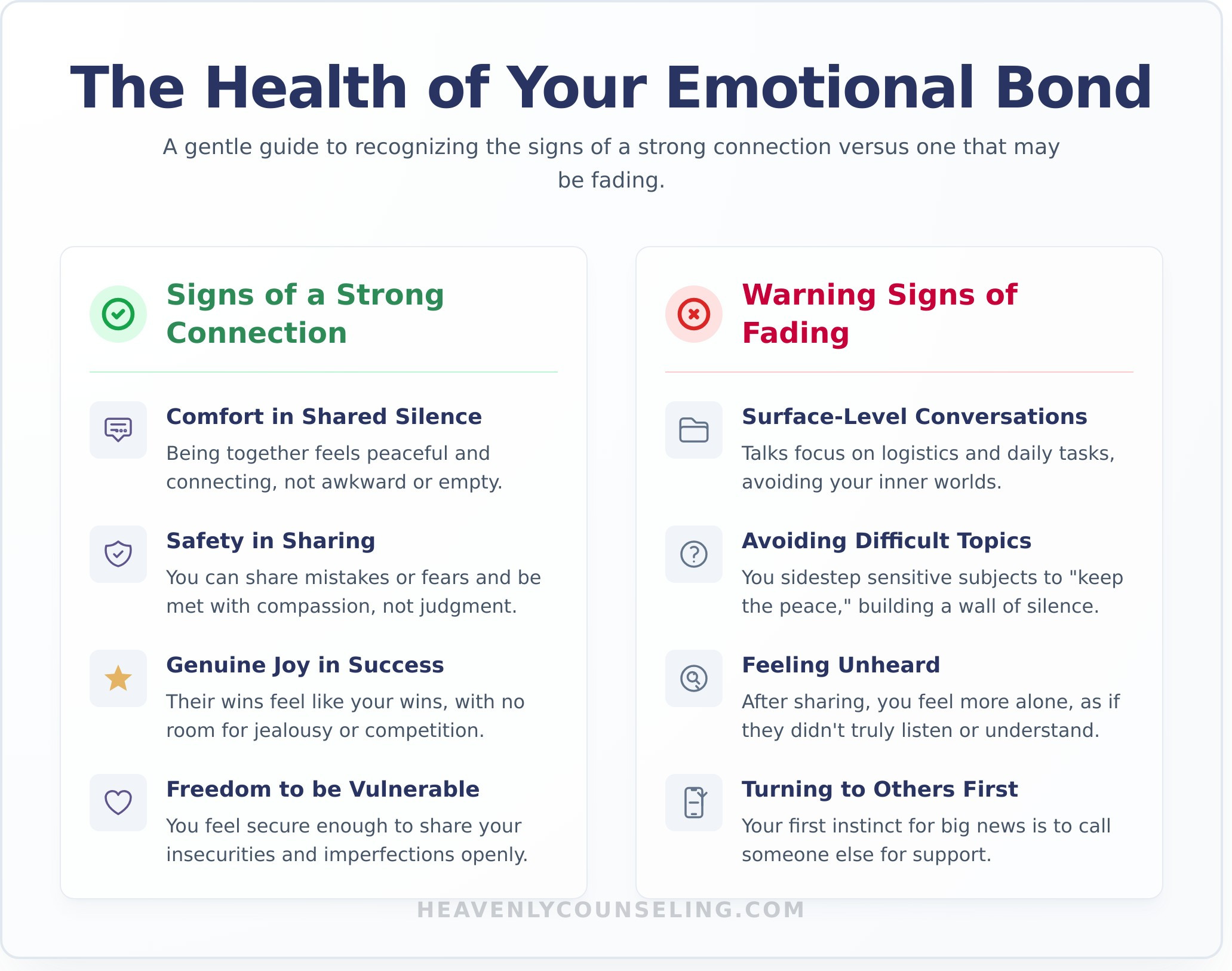
- Comfort in shared silence. Being together doesn’t require constant conversation to fill the space. The quiet moments feel peaceful and connecting, not awkward or empty.
- Safety in sharing difficult news. You can talk about a mistake, a fear, or a painful experience without dreading their reaction. You trust that you will be met with compassion, not judgment.
- Genuine joy in each other’s successes. Their wins feel like your wins. There is no room for jealousy or competition, only authentic, heartfelt celebration for their happiness.
- The freedom to be vulnerable. You feel secure enough to share your insecurities and imperfections. This ability to be truly open is built on the key elements of a strong emotional connection, like deep trust and mutual respect.
Warning Signs Your Connection May Be Weakening
If you feel a growing distance, it often shows up in subtle ways. A weakening emotional connection might include these gentle warnings:
- Conversations stay on the surface. Most of your talks are about logistics, daily tasks, or current events. You rarely discuss your inner worlds—your hopes, fears, or true feelings.
- You avoid difficult topics. To “keep the peace,” you might sidestep sensitive subjects. While this avoids immediate conflict, it can build a wall of unsaid things between you over time.
- You feel unheard or misunderstood. After sharing something important, you walk away feeling more alone than before, as if they didn’t truly listen or grasp what you were trying to say.
- You turn to others first. When you have big news—good or bad—your first instinct is to call or text someone else. This can be a sign that you no longer see this person as your primary emotional support.
The Foundation: Creating a Safe Space for Vulnerability
Before a genuine emotional connection can truly blossom, the ground it grows on must be safe and nurturing. This emotional safety is not a technique but an environment—a sanctuary for the heart where you feel your true self is welcome and accepted without condition. It’s the quiet understanding that you can share your fears, joys, and imperfections without risk of judgment or rejection. Creating this space is the most crucial step in any relationship, and it requires conscious, gentle effort from both people.
When this foundation is strong, vulnerability feels less like a risk and more like a shared journey. Here are a few core principles for building that safety together.
The Role of Trust and Consistency
Trust is not built in a single grand gesture, but in the quiet accumulation of small, reliable actions. It grows when you honor your commitments, keep your promises, and show up consistently. Being a predictable, safe presence for someone—a calm harbor in their moments of distress—is what slowly and steadily builds the trust necessary for true openness.
Putting Away Distractions
One of the most profound gifts you can offer another person is your undivided attention. In a world full of notifications and distractions, choosing to be fully present is a powerful act of love and respect. When you have an important conversation, put your phone away, turn off the TV, and make gentle eye contact. This simple gesture sends a clear message: You are my priority right now.
Listening Without Judgment
Often, when someone shares their struggles, our first instinct is to offer advice or find a solution. However, the goal of deep listening is to understand, not to fix. It means quieting your own thoughts and resisting the urge to interrupt with your own stories. Validating their feelings is one of the most powerful practices to build emotional connection because it shows you can hold space for their experience. A simple phrase like, “That sounds incredibly difficult,” can mean more than any piece of advice.
4 Gentle Practices to Build Emotional Connection
Building a deep emotional connection doesn’t happen through grand, infrequent gestures. It’s cultivated in the small, quiet moments of daily life. These gentle practices are designed to create profound shifts over time, nurturing safety and understanding in your relationship. We encourage you to start with just one or two that feel right for you. The goal is not perfection, but genuine, heartfelt interaction.
Practice Active and Compassionate Listening
True listening goes beyond simply hearing words; it’s about understanding the heart behind them. When your loved one is speaking, try to listen for the underlying emotions. Are they expressing frustration, joy, or worry? This practice shows you care about their inner world, not just the details of their day.
- Ask clarifying questions like, “What was that like for you?” to invite deeper sharing.
- Gently summarize what you heard: “It sounds like you felt really unappreciated in that meeting.”
- Offer your full, undivided attention, putting away distractions to create a safe space for them to speak.
Make and Receive ‘Bids for Connection’
A ‘bid’ is any small attempt to get attention, affirmation, or affection from another person. It can be verbal, like saying, “Look at that beautiful sunset!” or non-verbal, like a simple sigh or a gentle touch on the arm. Learning to recognize and ‘turn toward’ these bids with a simple acknowledgment—a glance, a nod, or a kind word—is fundamental. Consistently ignoring or ‘turning away’ from these small moments can slowly erode the foundation of your connection.
Ask Open-Ended Questions
Moving beyond routine questions can open the door to more meaningful conversations. While “How was your day?” often gets a one-word answer, an open-ended question invites storytelling and reflection. It communicates a genuine curiosity about their experiences and thoughts.
Instead of the usual, you might ask:
- “What was the best or most challenging part of your day?”
- “What’s something you’re thinking about lately?”
Share Your Own Vulnerabilities
A strong emotional connection is a two-way street. It requires you to be open as well. Vulnerability isn’t about oversharing; it’s about gently revealing your authentic self. You can start small by sharing a minor worry you have, a hope for the future, or something you’re proud of. This models the behavior you wish to see and builds the reciprocal trust necessary for a lasting bond.
Building this can be hard. It begins with a conversation.
Navigating Common Barriers to Emotional Connection
Building a deep bond doesn’t always come easily. It’s completely normal to face challenges when trying to foster a true emotional connection with someone you care about. Many of these obstacles stem from our past experiences or ingrained habits that can make us feel guarded. Understanding these common barriers is the first step toward approaching them with compassion and moving toward healing, together.
Recognizing them in yourself or a loved one can help you navigate these waters with more grace and patience.
Fear of Vulnerability and Rejection
Past hurts can leave a lasting impression, making it feel unsafe to be truly open again. The fear of being misunderstood or rejected is powerful. It’s important to acknowledge this fear in yourself and others with gentleness. You can rebuild this sense of safety by starting small—try sharing a low-stakes feeling or a minor worry. Each positive response helps build the confidence needed for deeper sharing.
Unresolved Conflict or Resentment
Lingering disagreements or past arguments that were never truly resolved can create an invisible wall between two people. It is incredibly difficult to feel close to someone when you are holding onto resentment or unspoken frustrations. These unresolved feelings can block intimacy and prevent a relationship from growing. Consider finding a calm, quiet moment to gently revisit these issues, focusing on understanding rather than blame.
The Impact of Anxiety or Stress
When life feels overwhelming, your mind and body can shift into survival mode. During periods of high stress or anxiety, your capacity for connection naturally shrinks as you focus your energy on just getting through the day. This can cause you to withdraw inward, not out of a lack of care, but out of necessity. Be gentle with yourself and your partner during these stressful seasons, recognizing that connection may look different for a while.
If you find that these barriers feel too heavy to navigate on your own, please know that support is available. Sometimes, the path to healing begins with a simple, safe conversation. You can learn more about finding guidance at heavenlycounseling.com.
When to Seek Support: How Counseling Can Help
Sometimes, the path to a deeper bond feels blocked, and navigating it alone can feel overwhelming. If you and your partner feel stuck in patterns that create distance instead of closeness, please know you are not alone. Inviting a neutral, supportive guide into the process can make all the difference. Seeking professional help is not a sign of failure; it is a courageous act of strength and a deep commitment to your relationship’s health. A therapist can provide a safe, non-judgmental space to explore challenges and equip you with the tools to build a more resilient emotional connection.
Creating a Path for Healthier Communication
Often, the biggest barrier to intimacy is how we talk to each other, especially during conflict. A counselor acts as a gentle facilitator, helping you both identify and change negative communication habits like defensiveness or shutting down. In therapy, you can learn to:
- Express your needs and feelings without blame or criticism.
- Listen with empathy to truly understand your partner’s perspective.
- Navigate disagreements constructively, turning conflict into an opportunity for growth.
Healing Past Wounds that Block Intimacy
Fear of vulnerability, lingering mistrust, and past hurts can create invisible walls in a relationship. Counseling provides a secure environment to address the root causes of these fears, whether they stem from previous relationships, family dynamics, or individual anxieties. By gently working through these past wounds together, you create a solid and secure foundation upon which true intimacy and trust can be rebuilt.
Taking the First Step
Your journey toward healing can begin with a simple, gentle conversation. Finding a therapist who understands your goals and values is a crucial first step toward strengthening your emotional connection. At Heavenly Counseling, we offer compassionate, faith-informed, and secular support for individuals and couples ready to find their way back to each other. We are here to walk alongside you, at your pace.
It begins with a conversation. Schedule a free 15-minute consultation to learn more.
Your Journey Toward Deeper Connection
Building a true emotional connection is not about a single grand gesture, but about the quiet, consistent work of creating a safe space for vulnerability. It’s nurtured through gentle practices—listening deeply, sharing openly, and showing up for one another, even when it feels difficult. Remember that every small step toward understanding and empathy reinforces the bond you share and is a testament to your commitment.
If you find yourself facing barriers that make this journey feel overwhelming, please know that reaching out for guidance is a courageous step toward healing. Our compassionate, professional therapists are here to walk alongside you, offering both faith-based and secular support to meet you exactly where you are. With convenient online therapy available throughout Texas and Florida, we make it simple to find guidance. You don’t have to navigate this alone. Let’s start the conversation.
Your path to more meaningful, fulfilling relationships is possible. Take the first gentle step today.
Frequently Asked Questions About Emotional Connection
What is the difference between emotional connection and emotional intimacy?
Emotional connection is the feeling of being understood, seen, and valued by another person. It is a sense of mutual empathy and belonging that makes you feel safe. Emotional intimacy, on the other hand, is the action of building that connection through shared vulnerability. It involves courageously sharing deep fears, dreams, and personal stories, creating a safe space for one another’s true selves. Intimacy is the path, while connection is the peaceful destination.
Can you have an emotional connection without physical intimacy?
Yes, absolutely. An emotional connection is built on trust, empathy, and mutual understanding—qualities that do not require physical touch to flourish. You can share a profound bond with a long-distance partner, a cherished family member, or a close friend through deep conversations and shared experiences. This type of bond is nurtured through emotional vulnerability and support, proving that true connection transcends physical presence. It is about feeling close in heart and mind.
How long does it take to build a strong emotional connection with someone?
There is no set timeline for building a strong emotional connection, as every relationship moves at its own unique and gentle pace. The process depends on mutual willingness to be vulnerable, consistent effort, and shared values. For some, a deep bond can form over a few meaningful conversations. For others, it may take months or even years of shared experiences to build that profound sense of trust. The key is always patience and genuine care.
What if I try to build a connection but my partner doesn’t reciprocate?
It can feel deeply disheartening when your efforts to connect are not returned. A gentle first step is to communicate your feelings and needs calmly, creating a safe space for them to share their perspective without judgment. However, connection requires two willing participants. If your partner remains unable to engage, it may be a sign of deeper issues. It is important to protect your own emotional well-being and consider if the relationship truly meets your needs for support.
Can an emotional connection be rebuilt after it has been broken?
Yes, rebuilding a broken connection is possible, though it requires great patience, honesty, and commitment from both individuals. The healing journey begins with acknowledging the hurt, taking responsibility, and a shared desire to move forward together. Re-establishing trust through consistent, caring actions and open communication is essential. Seeking professional guidance can provide a safe, structured space to navigate this delicate process and foster new patterns of relating with compassion.
Is it possible to have a deep emotional connection with a friend?
Absolutely. Deep, meaningful emotional connections are not exclusive to romantic relationships. A platonic friendship built on mutual trust, vulnerability, and unwavering support can be one of the most profound and healing bonds in a person’s life. These friendships provide a safe harbor where you feel completely seen, heard, and accepted for who you are. Nurturing these connections is a vital part of a full and emotionally healthy life, offering a unique sense of belonging.