
Have you ever felt a wave of anxiety before walking into a room full of people? Or found yourself replaying a simple conversation, worried you said the wrong thing? If the thought of making small talk feels draining, or if you long for deeper connections but feel stuck behind a wall of awkwardness, please know you are not alone. These feelings can make even the most basic social interaction feel like an overwhelming challenge, leaving you feeling isolated even when you’re surrounded by others.
This gentle guide is here to meet you exactly where you are. We will explore why connecting can feel so difficult and uncover the true importance of social connection for your peace and well-being. Together, we will walk through practical, compassionate ways to navigate conversations with more confidence, reduce social anxiety, and begin building the meaningful relationships you deserve. It all begins with understanding.
Understanding Social Interaction: More Than Just Talking
At its core, social interaction is a fundamental human need, as vital to our well-being as food and water. It’s the gentle, back-and-forth exchange between people that builds connection and understanding. While a textbook might answer the question of what is social interaction by defining it as a dynamic exchange, it’s truly about the feeling of being seen, heard, and valued. It’s not a performance where you have to say the perfect thing, but a safe space to share a part of yourself and receive a part of someone else in return. This simple act of connecting is a powerful cornerstone of our mental and emotional health.
The Core Components of Meaningful Interaction
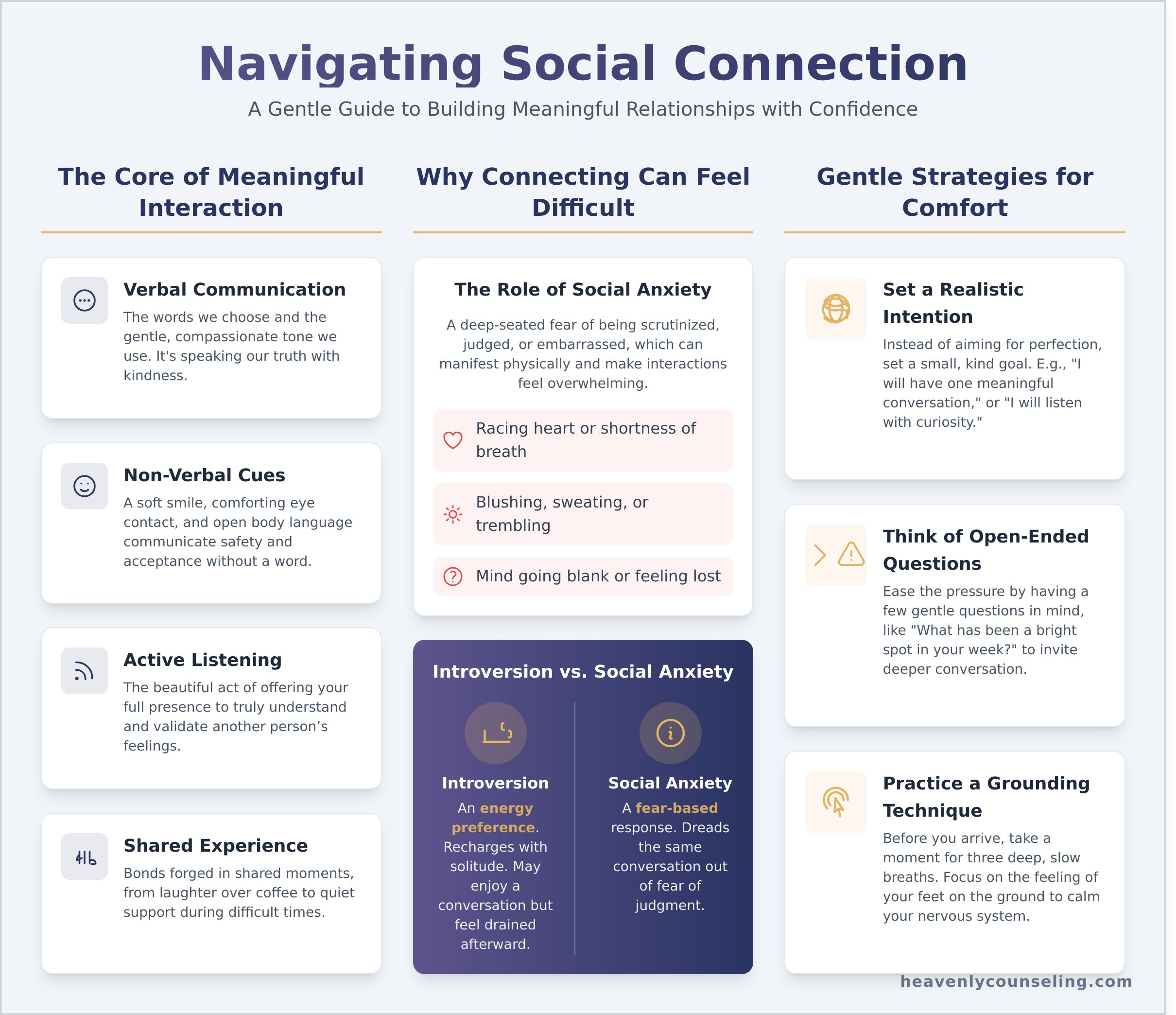
Meaningful connection is built on more than just words. It’s a delicate dance of several key elements working together to create a sense of trust and belonging. These include:
- Verbal Communication: This is about the words we choose and the gentle, compassionate tone we use to share them. It’s speaking our truth with kindness.
- Non-Verbal Cues: So much is said without a single word. A soft smile, comforting eye contact, and open body language can communicate safety and acceptance.
- Active Listening: This is the beautiful act of offering your full presence. It’s listening not just to respond, but to truly understand and validate another person’s feelings.
- Shared Experience: Bonds are often forged in shared moments, whether it’s laughter over a cup of coffee or quiet support during a difficult time. It’s the feeling of, “You, too?”
Why Connection is Crucial for Your Mental Health
Feeling connected to others is not just a nice-to-have; it is essential for a healthy mind. Positive social interaction acts as a buffer against life’s challenges. When we share our burdens with a trusted friend or family member, the weight often feels lighter, reducing stress and easing feelings of isolation. This strong social support system builds resilience, giving us the strength to navigate difficult seasons. Furthermore, being part of a community fosters a deep sense of belonging and can gently boost self-esteem, reminding us that we are not alone on our journey.
Why Does Social Interaction Feel So Difficult Sometimes?
If you’ve ever felt a knot in your stomach before a party or replayed a conversation over and over in your mind, please know you are not alone. Navigating social situations can feel genuinely challenging, and it’s a far more common experience than you might think. This difficulty isn’t a personal failing; it’s a human experience rooted in our wiring, our past, and our unique personalities. Let’s gently explore some of the reasons why connecting with others can sometimes feel like such a heavy lift.
The Role of Social Anxiety
Social anxiety is more than just shyness. It’s a deep-seated fear of being scrutinized, judged, or embarrassed in social settings. This fear can create a painful cycle: you avoid social events to escape the anxiety, which leads to isolation and reinforces the belief that you can’t handle them. This internal struggle can also manifest physically, making any social interaction feel overwhelming. You might experience:
- A racing heart or shortness of breath
- Blushing, sweating, or trembling
- A feeling that your mind has gone blank
Past Experiences and Learned Behaviors
Our past often walks into the present with us. A painful rejection, a critical comment from a family member, or a history of feeling like an outsider can create lasting wounds. These experiences teach us to anticipate a negative outcome, so we enter social situations with our guard up. Understanding the psychology of social groups helps us recognize that these are often learned patterns, not permanent truths. The hopeful news is that with gentle guidance, it is possible to unlearn these unhelpful thought patterns and build new, healthier ones.
These foundational social skills are often shaped in our earliest environments. Places that prioritize gentle, supportive interaction, such as the bilingual program at Bright Future Kids Academy, can help children build a healthy blueprint for connecting with others.
Introversion vs. Social Anxiety
It’s essential to distinguish between introversion and social anxiety. Introversion is an energy preference—it means you recharge your battery with solitude. Social anxiety, on the other hand, is fear-based. An introvert might genuinely enjoy a meaningful conversation but feel drained afterward, while someone with social anxiety might dread that same conversation out of fear of judgment. You can be a quiet introvert who loves people. Honoring your energy levels is key; it’s not about avoiding connection, but about engaging in a way that feels sustainable and true to you.
Gentle Strategies to Make Social Interactions More Comfortable
If the thought of a social gathering makes your heart beat a little faster, please know you are not alone. The goal of any social interaction is not a perfect performance but a chance for genuine connection, however small. While the authoritative definition of social interaction describes a dynamic exchange between people, we can approach that exchange with profound self-compassion. This journey is about taking small, manageable steps that feel safe and true for you, not about forcing drastic changes.
Remember to be kind to yourself through this process. Every small step forward is a victory worth celebrating.
Preparing for Social Situations
Approaching a social event can feel much calmer when you have a gentle plan. This isn’t about scripting your every move, but about creating a sense of inner safety and purpose for yourself before you even walk through the door.
- Set a realistic intention. Instead of aiming to be the life of the party, set a small, kind goal. For example: “I will have one meaningful conversation,” or “I will simply listen with curiosity.”
- Think of a few open-ended questions. Having a couple of gentle questions in mind can ease the pressure. Try questions like, “What has been a bright spot in your week?” or “What’s a project you’re excited about right now?”
- Practice a grounding technique. Before you arrive, take a moment to connect with your body. Try taking three deep, slow breaths, focusing on the feeling of your feet on the ground to calm your nervous system.
Navigating Conversations with Greater Ease
Once you are in a conversation, the pressure to say the “right” thing can feel overwhelming. The most powerful shift you can make is from focusing on what to say to focusing on how to listen. True connection blossoms when others feel truly heard and seen.
- Listen to understand, not just to reply. Let go of planning your response while someone is talking. Focus completely on their words, tone, and what they are sharing from the heart.
- Find common ground. Listen for shared interests, experiences, or even feelings. Saying, “I can really relate to that feeling,” creates an instant bridge of connection.
- Give yourself permission to exit. You do not need to stay in a conversation that feels draining. A simple, “It was so lovely chatting with you, I’m going to get some water now,” is a perfectly graceful way to move on.
Managing Your Energy and Setting Boundaries
Your social energy is a precious resource, not an unlimited one. Honoring your capacity is a profound act of self-care that makes future social engagements more sustainable and enjoyable. It is not selfish; it is wise.
- Recognize your social battery. Pay attention to the signs that you’re feeling drained, such as fatigue, irritability, or a strong desire to be alone.
- It is okay to say no. You can decline an invitation with kindness and without needing to justify it. A simple, “Thank you for thinking of me, but I need a quiet evening,” is enough.
- Choose your environment wisely. If large crowds are overwhelming, suggest or choose smaller gatherings. A one-on-one coffee date can be far more rewarding than a loud party.
From Small Talk to Meaningful Connection: Going Deeper
While small talk about the weather or weekend plans has its place, our hearts often seek something more nourishing. The journey from a surface-level chat to a bond of genuine trust is a gentle one, built on authenticity and a willingness to be truly seen. This kind of meaningful social interaction isn’t about saying the perfect thing; it’s about creating a safe space for real connection to grow.
Moving deeper requires a gentle shift from performance to presence. It’s about focusing on the quality of our connections, not just the quantity. A few deep, supportive friendships can bring more peace and joy than a wide circle of acquaintances.
Moving Beyond Scripted Conversations
Transforming a simple chat into a real conversation starts with stepping away from the “script.” It involves showing up as your authentic self and inviting the other person to do the same. You can begin this process by:
- Sharing your own thoughts and feelings. Instead of just stating facts, you might say, “I found that movie really moving,” and briefly explain why. This invites a more personal response.
- Showing genuine curiosity. Ask open-ended questions that go beyond “yes” or “no,” such as, “What has been bringing you joy lately?” or “What was that experience like for you?”
- Using humor and lightheartedness. Shared laughter is a powerful tool for building rapport and easing the pressure of a serious conversation.
The Art of Vulnerability
In a social context, vulnerability isn’t about sharing every secret. It’s the courageous act of letting someone see your true self, including your imperfections and struggles. Sharing a challenge you’re facing or a fear you have can create a powerful, immediate bond of trust. It communicates, “You are not alone in your struggles, and I am not perfect either.” Start small, perhaps by sharing with a friend you already feel safe with.
Finding Your People: Seeking Out Like-Minded Individuals
The most rewarding social interaction often happens when we are in environments where we feel we can be ourselves. Finding these spaces is key. Consider joining a club, a volunteer group, or a class centered around a hobby you love. When you connect over a shared passion, conversations often flow more naturally. Remember, the goal is to find a few people with whom you can build a treasure of true friendship.
If building these deeper connections feels overwhelming, please know that support is available. The journey toward meaningful relationships is a brave one, and you don’t have to walk it alone. It often begins with a conversation.
When to Seek Support: How Counseling Can Help
If the thought of social situations fills you with dread, please know you are not alone. Reaching out for support is not a sign of weakness; it is a courageous act of self-care. Many people feel hesitant or unsure about counseling, worrying it might be uncomfortable or that their problems aren’t “serious enough.” In truth, therapy is simply a dedicated, confidential space to learn and grow at your own pace, guided by a compassionate professional.
It provides a safe harbor where you can practice new skills without the fear of judgment, helping you build the confidence needed for meaningful social interaction outside the therapy room.
What Does Therapy for Social Anxiety Look Like?
A therapist meets you where you are, offering personalized guidance to help you find peace and confidence. In our sessions, we gently work together to:
- Challenge fearful thoughts: Using proven techniques like Cognitive Behavioral Therapy (CBT), we can identify and reframe the negative thought patterns that fuel social anxiety.
- Develop coping strategies: You will learn practical, calming techniques to manage physical symptoms of anxiety before, during, and after social events.
- Practice conversations: Through gentle role-playing, you can practice navigating conversations and setting boundaries in a supportive, non-judgmental environment.
- Build self-esteem: We work from the ground up to heal the roots of social fear, helping you rediscover your inherent worth and build lasting confidence.
Your Path to Healing and Connection
Therapy is more than just learning techniques; it’s a healing journey. A counselor can walk alongside you, helping you understand the ‘why’ behind your social fears and celebrating your progress, no matter how small. You don’t have to navigate this challenge by yourself. Your journey toward more meaningful connection is unique, and it deserves compassionate support. It begins with a conversation. Schedule a free consultation.
Your Gentle Path Forward to Meaningful Connection
Embarking on the journey toward connection can feel daunting, but it’s a path you never have to walk alone. Remember that building comfort in social interaction is a skill that can be gently learned, not a performance you must perfect. By embracing small, intentional steps and treating yourself with kindness, you can move from anxiety to confidence at your own pace. Your desire for deeper connection is valid, and every step forward, no matter how small, is a victory.
If past grief or persistent worry makes connecting feel especially heavy, please know there is a safe space for you to find guidance. At Heavenly Counseling, we specialize in helping people navigate anxiety and grief. We meet you where you are with compassionate, professional support, offering both faith-based and secular approaches to residents of Texas and Florida online. Ready to build more confident connections? It begins with a conversation.
Frequently Asked Questions About Social Interaction
What are some simple examples of positive social interaction?
Positive interactions don’t have to be long conversations. They can be as simple as offering a warm smile to a neighbor, genuinely thanking a cashier, or giving a coworker a sincere compliment. Asking someone about their day and actively listening to their response is another beautiful way to connect. These small moments build a foundation of comfort and confidence for future social interaction, showing that meaningful connection can be found in everyday encounters.
How can I practice social skills if I’m alone?
You can gently build your skills in a safe space, even when alone. Try watching conversations in movies and noticing body language and tone of voice. You can also practice asking open-ended questions in front of a mirror, like, “What was the best part of your weekend?” This helps you prepare gentle conversation starters for when you feel ready to use them, building your confidence at your own pace and on your own terms.
What is the main difference between being shy and having social anxiety?
It’s helpful to see shyness as a feeling of discomfort in new social situations, which often fades as you warm up to people. Social anxiety, however, involves a much more intense and persistent fear of being judged or embarrassed. This fear can feel overwhelming, sometimes leading to physical symptoms and causing you to avoid social settings altogether. If this distress regularly impacts your life, seeking gentle guidance can be a compassionate next step.
How do I handle it when a social interaction becomes awkward?
First, remember that awkward moments happen to everyone; they are a normal part of human connection. Take a gentle breath and offer yourself some compassion. You can try to shift the focus by asking the other person a simple question about themselves. Sometimes, a lighthearted comment can break the tension. If needed, it is always okay to politely excuse yourself from the conversation. The goal is grace, not perfection.
Can online interactions help improve my social skills?
Yes, online spaces can be a wonderful, low-pressure starting point. They allow you to practice expressing your thoughts and connecting with others who share your interests, which can build tremendous confidence. However, it’s important to remember that this is just one piece of the puzzle. Real-world social interaction involves non-verbal cues like body language, so it’s helpful to see online practice as a gentle stepping stone toward face-to-face connection.
What if I feel like I have nothing interesting to say to other people?
This is a very common feeling, and it comes from a place of wanting to connect. The most beautiful shift you can make is from trying to *be interesting* to being *genuinely interested*. People appreciate being heard. Practice asking gentle, open-ended questions like, “What have you been enjoying lately?” or “How did you get into that hobby?” Your curiosity and attentive listening are the most interesting gifts you can offer anyone.